



APPLICATION DETAILS
Hardwood Plywood vs Softwood Plywood: Which Is Better?
When choosing plywood for construction, furniture manufacturing, packaging, or interior decoration, one of the most common questions is: Hardwood Plywood vs Softwood Plywood – Which Is Better?
The answer depends on your project requirements, budget, durability expectations, and environmental conditions. Understanding the differences between hardwood plywood and softwood plywood can help buyers, contractors, distributors, and manufacturers make informed purchasing decisions.
At LEADER®, we are committed to providing high-quality wood panel solutions for global customers.
Our Vision: LEADER® in China's wooden board industry.
Our Mission: Our mission is to continually contribute to the green development of the international wood industry supply chain.
In this guide, we will compare hardwood plywood and softwood plywood in terms of material, strength, applications, cost, and performance.
What Is Hardwood Plywood?
Hardwood plywood is manufactured using veneers from hardwood species such as:
- Birch
- Poplar
- Eucalyptus
- Oak
- Maple
- Beech
The veneers are bonded together with strong adhesives under high pressure and temperature to create durable and stable panels.
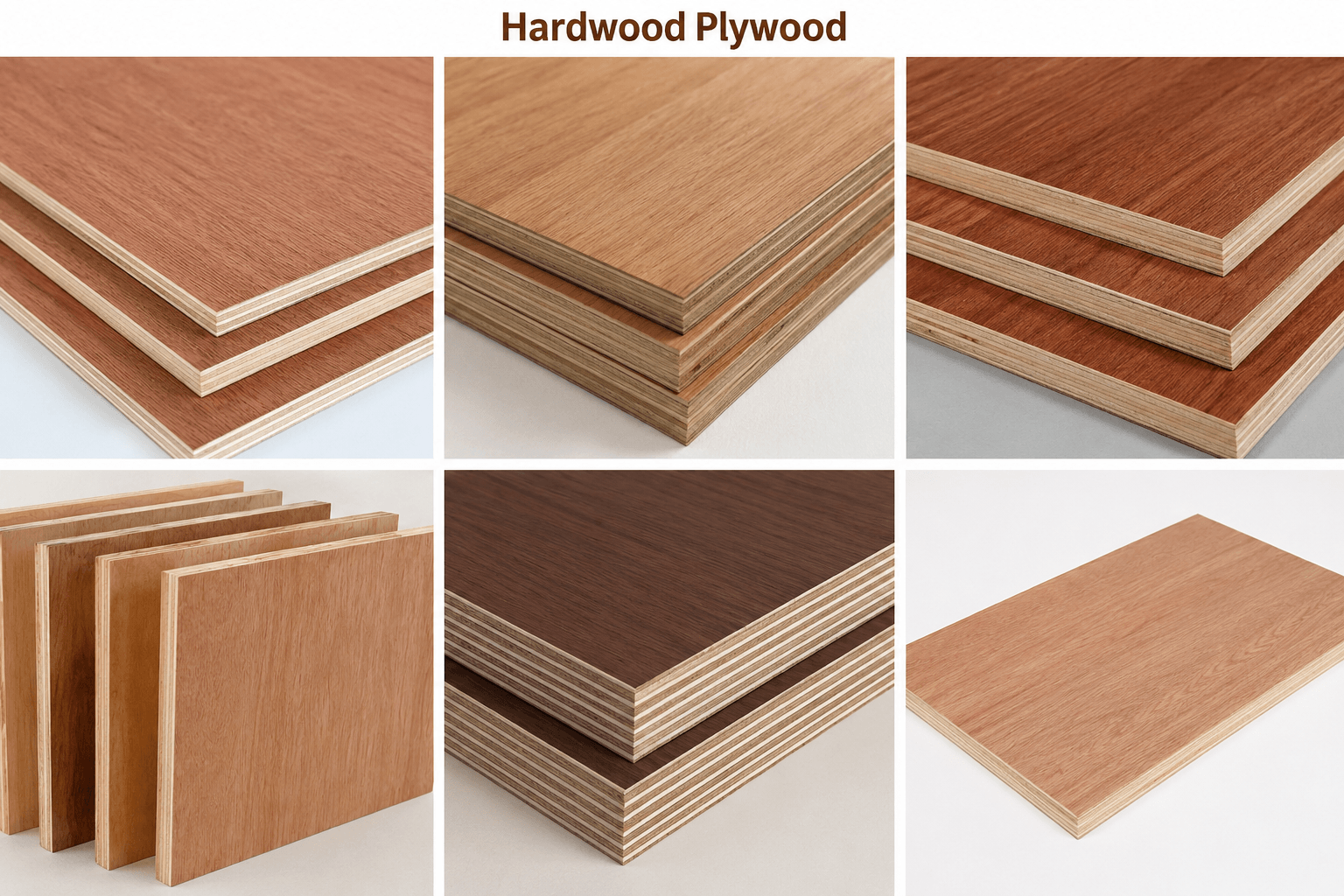
Key Characteristics of Hardwood Plywood
✔ Higher density and strength
✔ Excellent load-bearing capacity
✔ Smooth surface for finishing
✔ Superior screw-holding performance
✔ Better wear resistance
Because of its strength and appearance, hardwood plywood is widely used in furniture manufacturing, cabinetry, flooring substrates, and high-end interior decoration.
What Is Softwood Plywood?
Softwood plywood is produced from softwood species such as:
- Pine
- Spruce
- Fir
- Cedar
These wood species generally grow faster and are more readily available, making softwood plywood a cost-effective solution for many construction applications.
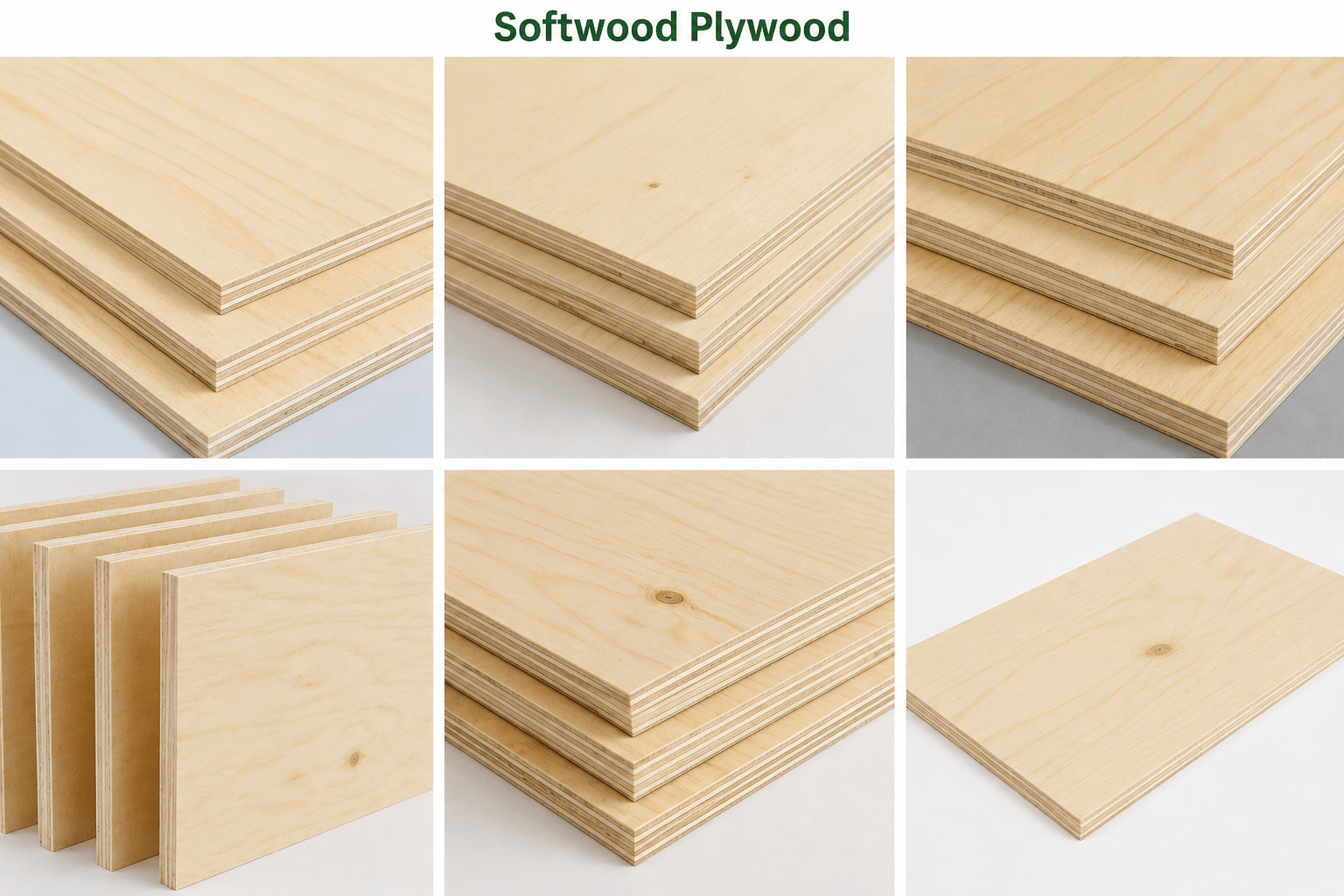
Key Characteristics of Softwood Plywood
✔ Lightweight structure
✔ Good dimensional stability
✔ Easy machining and installation
✔ Cost-effective pricing
✔ Suitable for large-scale construction projects
Softwood plywood is commonly used for roofing, wall sheathing, subfloors, packaging, and temporary construction works.
Hardwood Plywood vs Softwood Plywood: Key Differences
1. Strength and Durability
Hardwood plywood generally offers greater strength due to the density of hardwood veneers.
For applications requiring:
- Heavy loads
- Long-term durability
- Structural stability
Hardwood plywood is often the preferred choice.
Softwood plywood performs well in general construction but may not match hardwood plywood in load-bearing performance.
Winner: Hardwood Plywood
2. Weight
Softwood plywood is lighter than hardwood plywood.
This makes transportation, handling, and installation easier, especially for large construction projects.
Winner: Softwood Plywood
3. Appearance
Hardwood plywood typically provides a smoother and more attractive surface, making it ideal for visible furniture and decorative applications.
Many hardwood plywood panels can be stained, painted, or laminated to achieve premium finishes.
Winner: Hardwood Plywood
4. Cost
Softwood plywood is generally less expensive because softwood trees grow faster and are more abundant.
For budget-conscious projects, softwood plywood offers excellent value.
Winner: Softwood Plywood
5. Moisture Resistance
Moisture resistance depends more on glue type and manufacturing quality than wood species alone.
Exterior-grade hardwood and softwood plywood can both perform well in humid environments when manufactured with waterproof adhesives.
At LEADER®, we offer plywood solutions that meet international standards for moisture resistance and durability.
Winner: Tie (depends on grade and adhesive)
Common Applications
MESSAGE ONLINE
RELATED NEWS