



CONSULTATION DETAILS
Treated Plywood Application Guidelines
What is treated plywood?
Treated Plywood is a type of plywood that has been given a special chemical treatment(Leaderplywood has both CA and CCA treated plywood.) designed to increase its resistance to corrosion, insects and moisture.It is commonly used in flooring,wall linings,roofing and general construction.

Why Treated?
Wood is naturally susceptible to damage from the following factors, and preservative treatment can significantly extend its service life:
Moisture and mold resistance
Ordinary plywood tends to absorb water and swell in humid environments, harboring fungi that can lead to rot. Preservatives such as ACQ stop moisture penetration and mold growth.
Insects and Moths
Insects such as termites and carpenter ants can eat away at wood. Preservatives (e.g. borates) kill or repel pests.
UV and Weathering Resistance
Wood exposed outdoors for long periods of time is susceptible to sunlight and weathering. Preservative treatments slow down deterioration.
Extends Service Life
Untreated plywood may only last 1-3 years outdoors, while preservative treatments can extend it to 10 years or more.
Application Scenarios for Treated Plywood
Treated Plywood is designed for harsh environments and common uses include:
① Outdoor buildings and structures
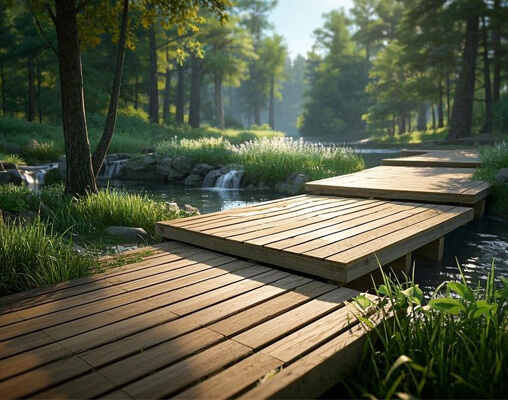
Decking: Used as a ground or decking substrate to resist rain and moisture.
Fences and pickets: sections that come into contact with soil or wet conditions (e.g., posts).
Roof and exterior sheathing: used as a support material under waterproofing.
Garden facilities: flower boxes, gazebos, children's play facilities, etc.
② Moist or highly corrosive environments
Bathrooms and kitchens: for use in areas with high humidity (environmentally friendly anticorrosive agents should be selected).
Basement & Garage: Anti-humidity and anti-mold, especially when the ground is in direct contact.
Coastal areas: anti-salt spray corrosion.

③ Special industrial use
Agricultural buildings: livestock barns, greenhouses, and other places susceptible to corrosion by organic substances.
Temporary construction: Site formwork, temporary flooring, and other scenes that require repeated use.
Precautions
Safety: Some preservatives (e.g., early CCA containing arsenic) may be harmful, choose environmentally friendly products (e.g., ACQ, copper azole) and avoid use in indoor food contact areas.
Compatibility: Preservatives may corrode common metal screws, use stainless steel or galvanized hardware.
Environmental Disposal: Waste preserved wood should be disposed of in accordance with local regulations and should not be burned.
Summary
Treated Plywood is chemically treated to address the natural imperfections of wood, making it ideal for outdoor, wet or highly corrosive environments in a wide range of architectural, horticultural and industrial applications. Selection requires matching the preservation grade (e.g. “ground contact grade” or “non-ground contact grade”) to the specific scenario, as well as safety and environmental concerns.
RELATED NEWS
MESSAGE ONLINE