




CONSULTATION DETAILS
How to Choose High Quality Plywood for Construction
With so many plywood types, grades, and manufacturers available in the global market, buyers often ask: How can I identify high quality plywood for construction?
At LEADER®, we understand that every construction project requires reliable and consistent building materials. Our vision is LEADER® in China's wooden board industry, and our mission is to continually contribute to the green development of the international wood industry supply chain. Through advanced manufacturing technology, strict quality control, and sustainable production, LEADER® supplies premium plywood products to customers around the world.
Why High Quality Plywood Matters
Construction plywood is expected to perform under heavy loads, changing weather conditions, and long-term use. Poor-quality plywood may cause structural failure, surface defects, moisture damage, or costly repairs.
High-quality plywood offers several important advantages:
-
Excellent structural strength
-
Superior dimensional stability
-
Long service life
-
Better moisture resistance
-
Smooth surface finish
-
Reduced maintenance costs
-
Improved construction efficiency
Selecting the right plywood not only improves project quality but also reduces overall construction costs over time.
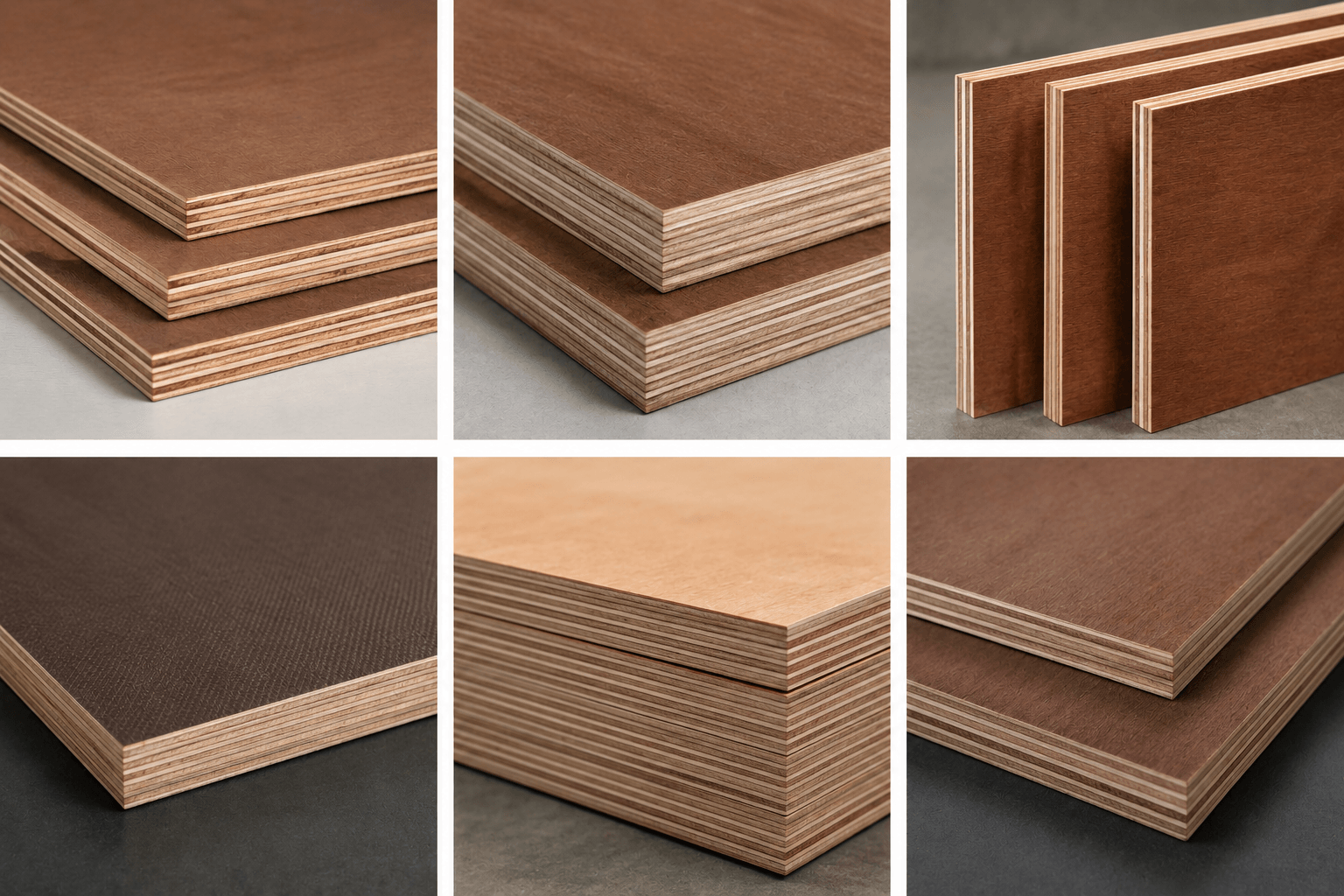
What Is Construction Plywood?
Construction plywood is an engineered wood panel made by bonding multiple layers of wood veneer together using high-strength adhesives under heat and pressure.
The cross-grain structure of plywood increases its strength while minimizing expansion, shrinkage, and warping.
Depending on the application, construction plywood may include:
-
Commercial Plywood
-
Marine Plywood
-
Hardwood Plywood
-
Softwood Plywood
Each type is designed to meet different performance requirements.
1. Check the Core Material
The quality of the plywood core is one of the most important factors.
Premium plywood uses carefully selected hardwood or mixed hardwood veneers with minimal gaps between layers.
Low-quality plywood often contains:
-
Large core voids
-
Overlapping veneers
-
Broken veneer pieces
-
Poor bonding
These defects reduce structural strength and may lead to cracking or delamination during use.
At LEADER®, every plywood panel undergoes strict inspection to ensure a dense, uniform core with excellent load-bearing performance.
2. Examine the Surface Quality
A smooth and even surface indicates better manufacturing quality.
Look for plywood with:
-
Smooth sanding
-
Uniform veneer color
-
No bubbles
-
No cracks
-
No open knots
-
No repairs on face veneer
A high-quality surface improves painting, laminating, veneering, and decorative finishing.
3. Evaluate the Bonding Strength
The adhesive used during manufacturing greatly influences plywood durability.
Different glue types include:
MR Glue
Suitable for interior furniture and dry environments.
Melamine Glue
Provides improved moisture resistance for semi-exterior applications.
Phenolic WBP Glue
Offers excellent waterproof performance for construction, concrete formwork, and outdoor projects.
High-quality plywood should maintain strong bonding even after long-term exposure to moisture and changing temperatures.
4. Inspect the Thickness Accuracy
Consistent thickness is essential for modern construction.
Uneven panels may create installation problems and reduce structural stability.
Professional plywood manufacturers maintain strict thickness tolerances throughout production.
LEADER® uses advanced automatic calibration equipment to ensure every panel meets international dimensional standards.
RELATED NEWS
MESSAGE ONLINE