




CONSULTATION DETAILS
Ultimate Guide to Film Faced Plywood
Introduction
Film Faced Plywood is one of the most widely used construction materials in the global building industry. Known for its durability, smooth concrete finish, water resistance, and multiple reuse capability, it has become the preferred choice for contractors, builders, distributors, and formwork companies worldwide.
As a professional plywood manufacturer and exporter, Leader Plywood has supplied high-quality Film Faced Plywood to customers across Australia, New Zealand, Europe, the Middle East, Southeast Asia, and South America for many years. Through extensive manufacturing experience and thousands of successful export projects, we understand what buyers need when selecting the right plywood for construction applications.
This comprehensive guide covers everything you need to know about Film Faced Plywood, including thickness options, density specifications, glue types, reuse times, certifications, applications, and frequently asked questions
What Is Film Faced Plywood?
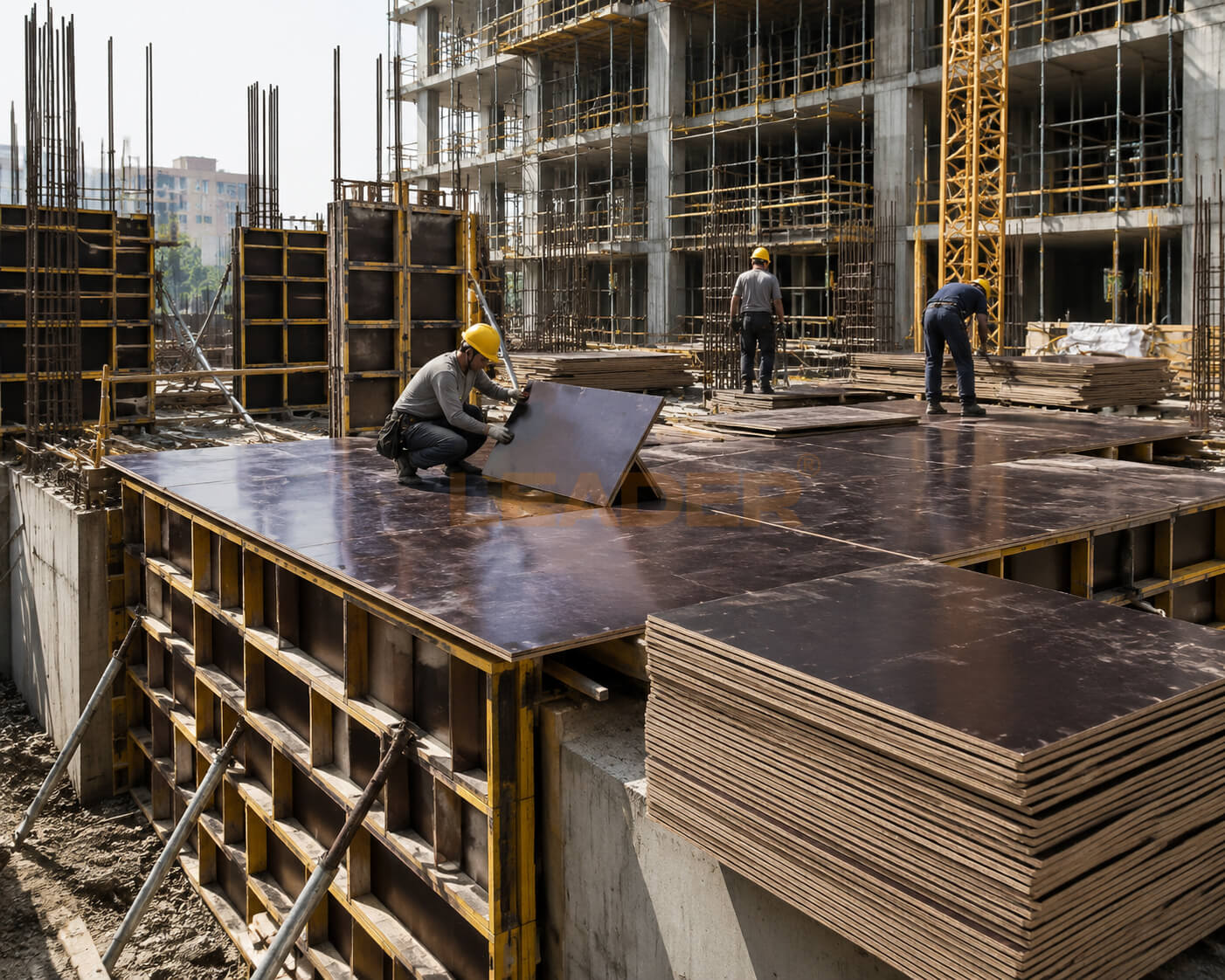
Film Faced Plywood is a high-strength plywood panel covered with a waterproof phenolic film on both sides. The film provides excellent resistance against moisture, abrasion, chemicals, and harsh weather conditions.
The plywood core is typically manufactured from:
-
Poplar Veneer
-
Hardwood Veneer
-
Birch Veneer
-
Combi Core (Poplar + Hardwood)
The smooth film surface ensures easy concrete release and a superior concrete finish after formwork removal.
Because of its durability and cost-effectiveness, Film Faced Plywood is widely used in:
-
Concrete formwork
-
Construction projects
-
Infrastructure development
-
Bridge construction
-
High-rise buildings
-
Industrial structures
Why Is Film Faced Plywood So Popular?
Film Faced Plywood offers several advantages over traditional timber formwork systems.
Key Benefits
High Strength
The cross-laminated veneer structure provides excellent load-bearing performance.
Water Resistance
Phenolic film and waterproof glue help prevent water penetration.
Smooth Concrete Finish
The film surface creates clean and uniform concrete surfaces.
Easy Demolding
Concrete does not easily adhere to the film surface.
Multiple Reuse Capability
Quality Film Faced Plywood can be reused many times, reducing project costs.
Cost Efficiency
Compared with steel formwork, Film Faced Plywood provides an excellent balance between performance and affordability.
Film Faced Plywood Thickness Guide
Selecting the correct thickness is essential for project performance.
Common Thicknesses
| Thickness | Application |
|---|---|
| 9mm | Light construction |
| 12mm | Small formwork projects |
| 15mm | General concrete formwork |
| 18mm | Most common construction use |
| 21mm | Heavy-duty formwork |
| 24mm | Large infrastructure projects |
| 27mm | High-load applications |
| 30mm | Specialized engineering projects |
Most Popular Thickness: 18mm
Globally, 18mm Film Faced Plywood is the most commonly used specification.
Advantages:
-
Excellent strength
-
Cost-effective
-
Easy handling
-
Suitable for wall and slab formwork
At Leader Plywood, 18mm Film Faced Plywood represents the majority of export orders due to its versatility and durability.
Film Faced Plywood Density Explained
Density directly affects strength, durability, and reuse times.
Typical Density Range
RELATED NEWS
MESSAGE ONLINE